
Booklet Binding Options
The right binding method can make a big difference in the appearance, durability and functionality of a printed piece.
Beeline + Blue offers several booklet binding options for reports, manuals, presentations, programs, workbooks, planners and other business printing projects. Whether you need five books or fifty, we can help you choose the best solution based on page count, budget and how the finished piece will be used.
Not Sure Which Binding Is Best?
Page count is part of the decision, since saddle-stitching isn’t usually suitable for documents with more than 36 pages.
Consider also how often the piece will be used, whether it needs to lay flat, how durable it needs to be and the impression you want it to make. Beeline + Blue can recommend a binding method that balances function, appearance and budget.
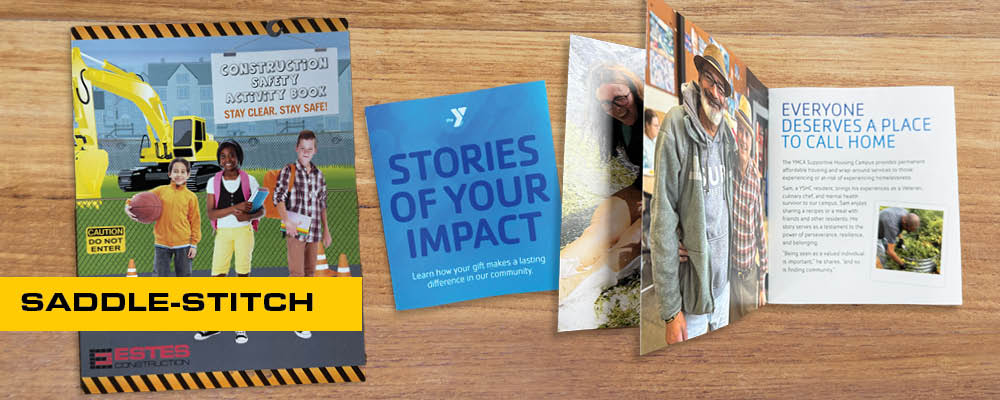
Saddle Stitch Binding
Saddle stitching is a popular, economical option for booklets with fewer pages. Printed sheets are folded in half and secured with staples along the spine for a clean, familiar finish. Beeline + Blue can saddle stitch booklets approximately 6 to 12 inches tall.
It’s a great choice for brochures, programs, magazines, catalogs and event booklets.
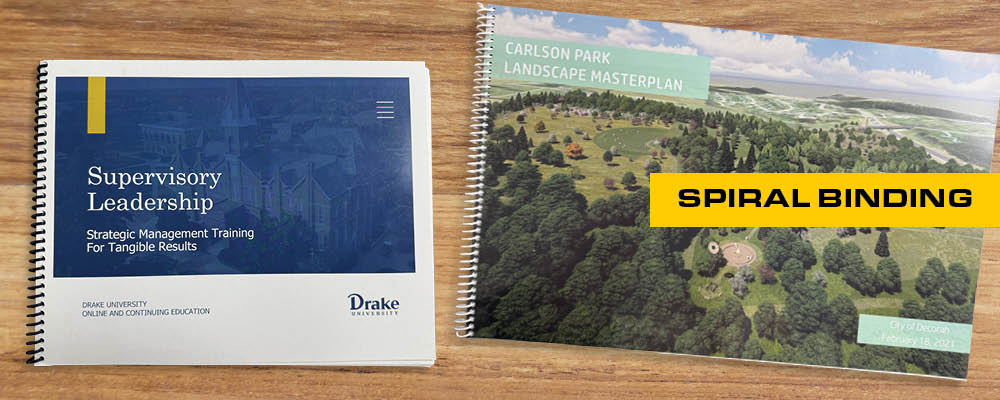
Spiral Binding
Spiral binding uses a durable plastic coil inserted through punched holes along the edge of the pages.
Because spiral-bound books lay flat when open and can fold back on themselves, they work especially well for materials that need to be referenced frequently.
Common uses include: training manuals, notebooks, presentations, planners, and workbooks.
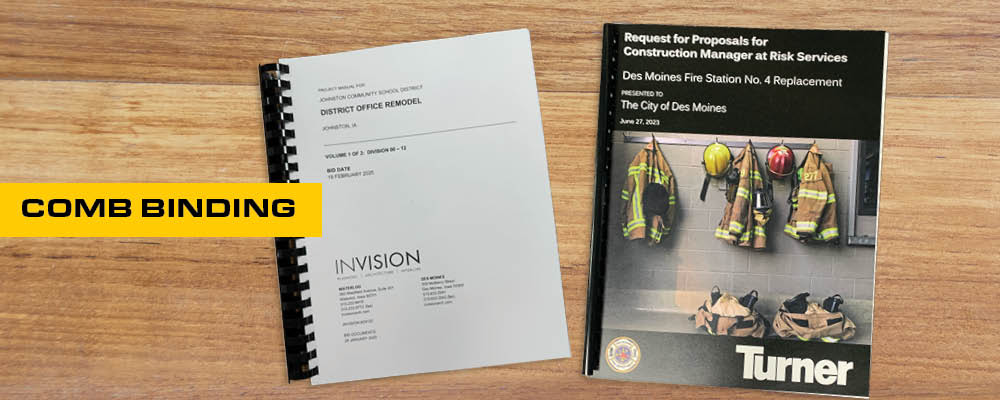
Comb Binding
Comb binding uses a flexible plastic spine that fits through rectangular holes punched along the edge of the pages.
It is an economical choice for larger documents and also makes it relatively easy to add or remove pages. Comb binding can be a good option for books with 100 pages or more.
Common uses include manuals, reports, reference books, workbooks, and training materials.
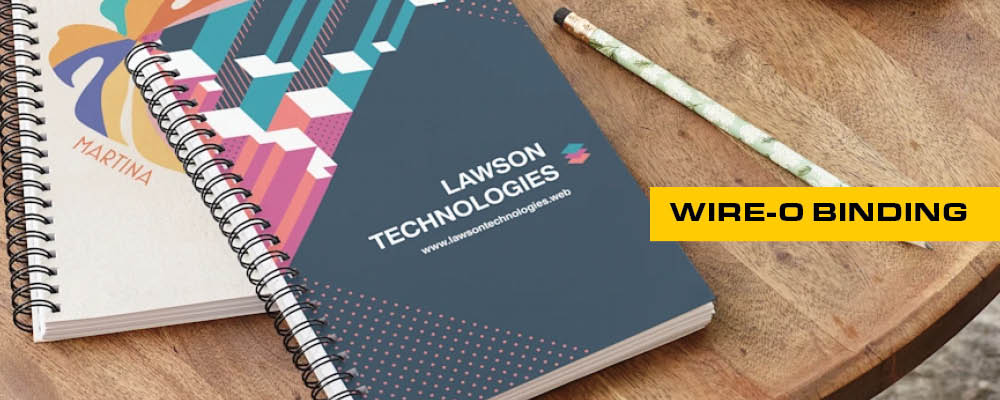
Wire-O Binding
Wire-O binding, also known as twin-loop or double-loop binding, uses metal wire to create a durable, polished finish.
Wire-bound books lay flat when open and offer a more refined appearance, making them a popular choice for presentation materials and documents where appearance matters.
Common uses include proposals, reports, calendars, presentations, and portfolios.